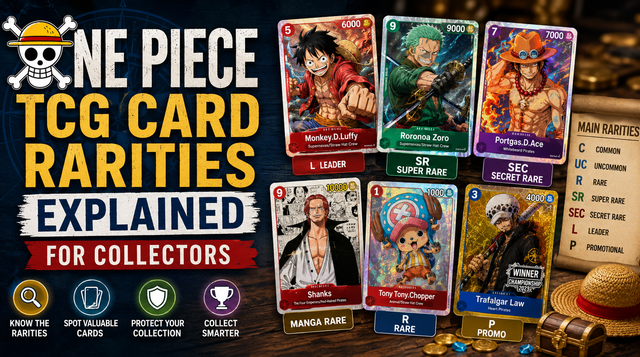
Collecting trading cards becomes easier when you understand why some appear often while others are difficult to find. The One Piece TCG attracts collectors through popular characters, artwork, foil treatments, alternate illustrations, and limited promotional releases. Yet its rarity symbols and special versions can confuse beginners.
This guide explains the main rarity levels, how premium versions differ from regular cards, and what to examine before buying or trading. Whether you are opening your first booster pack or completing a set, understanding rarity supports better decisions and safer card care.
Why Rarity Matters
Rarity shows how frequently a card is expected to appear, but it also influences demand, collectability, and price. Higher-rarity cards are generally harder to pull, although scarcity does not guarantee value. Character popularity, artwork, competitive usefulness, condition, and distribution can be equally important.
A standard card and an alternate-art card may have identical gameplay text yet sell for different prices. Collectors often value visual appeal and limited availability more than basic rarity. Treat the printed rarity as a starting point, not the only measure of importance.
Understanding the Rarity Codes
Most cards show a rarity code near the bottom. These letters identify the basic classification of the card and make set organization easier.
The main codes include:
- C for Common
- UC for Uncommon
- R for Rare
- SR for Super Rare
- SEC for Secret Rare
- L for Leader
- P for Promotional
A rarity code does not always tell the full story. Alternate artwork, parallel foil, special stamps, anniversary designs, and tournament versions may keep the same printed code as the standard card. Collectors must examine the design, finish, card number, and release source.
Common Cards
Common cards form the largest portion of most sets. They frequently appear in booster packs and often feature supporting characters, events, stages, or simple gameplay effects. Regular versions are usually inexpensive and easy to replace.
Commons can still become desirable. Competitive players may need several copies of an effective card, increasing demand. Older examples in excellent condition may also become less available. Set collectors should arrange commons by number so missing cards are easy to identify.
Uncommon Cards
Uncommon cards appear less frequently than commons but remain accessible. They often include recognizable characters, stronger effects, or useful support for particular deck strategies.
Most standard uncommons have modest prices, although tournament demand can change that. A playable card may become popular despite its low printed rarity. Premium foil, different artwork, or limited distribution can also make a special uncommon more appealing than its regular version.
Rare Cards
Rare cards are harder to pull and often receive more attractive presentation. Many have foil elements, notable characters, or useful effects that appeal to players and collectors.
Standard rares are commonly affordable, but alternate-art versions can be more valuable. Compare the illustration, background, border, texture, and foil pattern. Cards with the same number and effect may still be separate collectible versions, so clear photographs matter when purchasing online.
Super Rare Cards
Super Rare cards are exciting booster-pack pulls that usually feature important characters, detailed artwork, powerful effects, and foil finishes. They carry the SR code, but some also exist as alternate-art versions.
A regular Super Rare may gain demand through competitive strength or character popularity. An alternate-art SR is harder to obtain and often becomes a chase card. Before buying, compare the exact image and card number with a dependable set list to avoid confusing standard and premium versions.
Secret Rare Cards
Secret Rare cards carry the SEC code and are usually among the hardest standard cards to pull. They often feature major characters, illustrations, and premium finishes.
Values vary according to character popularity, artwork, competitive use, condition, and supply. Collectors must also distinguish regular Secret Rares from alternate-art versions. An alternate may have different artwork and a lower pull rate, making it one of the set’s main chase cards.
Leader Cards
Leader cards determine deck colors, strategies, and available combinations during play. Standard Leaders use the L code and are generally easier to obtain than premium chase cards.
Alternate-art Leaders commonly feature full-card illustrations, textured surfaces, and striking designs. A popular alternate Leader may become one of a set’s most recognizable cards even though its printed rarity remains L.
Alternate-Art and Parallel Cards
Alternate-art cards are visually enhanced versions of existing cards. They usually retain the same card number, effect, and basic rarity as the regular version, which makes careful identification important.
Parallel treatments may include:
- Full-art character illustrations
- Textured foil surfaces
- Unique borders or backgrounds
- Anniversary symbols
- Event or winner stamps
These versions appear less frequently and are often the main targets for collectors. Their prices are influenced by pull difficulty, visual quality, character popularity, condition, and demand. For many fans, alternate artwork provides the strongest reason to collect One Piece TCG cards rather than focusing only on gameplay.
Manga Rare Cards
Manga Rare cards are among the game’s most desirable pulls. They use black-and-white artwork inspired by manga panels and usually include premium foil or textured details. Extremely low pull rates make them headline cards for their sets.
They connect directly with the original manga style and usually feature major characters. Clean copies can command high prices, so examine scratches, edge wear, print lines, corners, and centering. Place a freshly pulled Manga Rare in a soft sleeve and protective holder immediately.
Promotional and Event Cards
Promotional cards carry the P code and are distributed outside standard booster packs. They may come from magazines, starter events, store campaigns, tournaments, bundles, or celebrations.
A promo’s value depends heavily on distribution. A widely available card may stay inexpensive, while a tournament winner card or regional exclusive can be difficult to locate. Research its origin and check for a stamp, anniversary mark, winner label, or another identifying feature.
How to Identify a Card Correctly
Accurate identification prevents costly mistakes. Start with the card number, set code, rarity symbol, artwork, finish, language, and visible stamps. Compare those details with reliable card lists and reference images.
Check the following points:
- Regular artwork or alternate artwork
- Standard foil or textured finish
- Tournament, anniversary, or winner stamp
- Correct language and set code
- Condition matching the seller’s description
Do not identify a card by character name alone. Popular characters appear across many sets, and several cards may use similar names while having different effects, numbers, rarities, and values.
Condition, Storage, and Grading
Condition can influence value as strongly as rarity. Collectors look for clean surfaces, sharp corners, smooth edges, balanced centering, and minimal factory defects. A card pulled directly from a pack is not automatically perfect.
Professional grading may help authenticate and protect valuable cards, but fees should be considered. Grading every rare card is usually unnecessary. High-value Manga Rares, limited promos, premium alternate arts, and clean chase cards are more common candidates.
Use quality sleeves, rigid holders, or secure binders for storage. Keep cards away from direct sunlight, moisture, heat, dust, and heavy pressure. Careful storage preserves appearance and makes future trading or selling easier.
Collect With a Clear Purpose
Understanding rarity makes collecting more organized and enjoyable. Decide whether your goal is a complete set, favorite characters, alternate artwork, competitive cards, promotional releases, or premium chase cards.
Use rarity symbols as a guide, but consider artwork, demand, condition, pull rate, and release method before judging a card. The most expensive card is not automatically the best addition to your collection. A thoughtful collection should match your interests, budget, and personal connection to the series.
As new releases appear, special treatments and distribution methods may change. Learning to compare versions, verify details, and protect important cards will allow you to collect confidently and appreciate every card you add.
