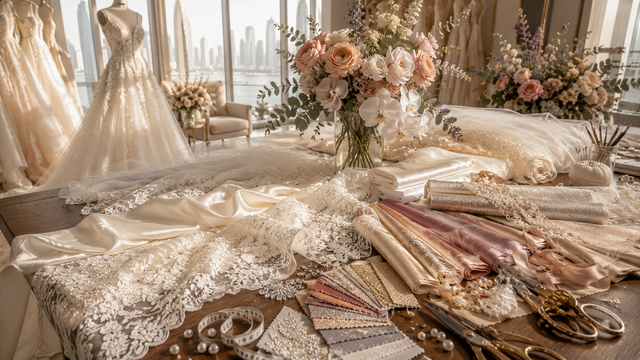
When brides begin shopping for a wedding dress, they often focus on silhouettes, necklines, or designer names. While those details certainly matter, one of the biggest factors influencing how a gown looks, feels, and photographs is something many brides overlook at first: the fabric.
The same dress design can create two completely different impressions depending on whether it is made from satin, lace, crepe, or tulle. Fabric determines how a gown moves as you walk, how comfortable it feels during a long celebration, and even how it appears in your wedding photographs.
Many brides visiting Vanila Studio Dubai discover that trying different fabrics changes their perspective entirely. A gown that looks stunning on a hanger may feel heavier than expected, while a simple design in premium silk can instantly become unforgettable.
Understanding bridal fabrics helps you choose a gown that is not only beautiful but also practical for your venue, season, and personal style.
Why Fabric Matters More Than Most Brides Realize
Think of fabric as the foundation of your wedding dress.
Every detail, from the structure of the bodice to the way the skirt flows, depends on the material used. Even subtle differences between fabrics can dramatically change the final look.
For example, a structured satin gown creates clean architectural lines, while chiffon moves softly with every step. Lace introduces texture and romance, whereas crepe offers understated elegance with a contemporary feel.
Instead of asking which fabric is “best,” the better question is which fabric best suits your wedding day.
Satin: The Definition of Timeless Elegance
Few bridal fabrics have remained as consistently popular as satin.
Its smooth surface reflects light beautifully, giving wedding dresses a refined appearance without relying on heavy embellishment. Modern satin is available in several finishes, from soft matte textures to luxurious high sheen varieties.
Satin works especially well for:
- Classic weddings
- Luxury hotel venues
- Formal evening ceremonies
- Minimalist bridal designs
Because it holds its shape well, satin is often used for structured A line gowns, ball gowns, and dresses with dramatic trains.
Although satin feels luxurious, premium versions are surprisingly comfortable when professionally tailored.
Lace: Romance Woven Into Every Detail
Lace has been part of bridal fashion for centuries, yet it continues to evolve with every designer collection.
Today’s lace is lighter, more delicate, and often layered over soft fabrics to create depth without adding unnecessary weight.
Different styles of lace offer different personalities.
Floral lace creates a romantic atmosphere.
Geometric lace feels modern.
Chantilly lace adds softness and elegance.
Three dimensional lace appliqués provide texture while maintaining sophistication.
Rather than covering the entire gown, many contemporary designers now use lace strategically to highlight sleeves, bodices, backs, or cathedral veils.
Crepe: Modern Simplicity at Its Best
For brides who appreciate clean lines and understated luxury, crepe has become one of the most desirable bridal fabrics.
Crepe drapes naturally against the body without appearing stiff or overly structured.
Its smooth finish allows the silhouette to become the main feature rather than decorative embellishments.
Crepe is particularly popular for:
- Contemporary weddings
- Rooftop venues
- Destination ceremonies
- Civil weddings
- Elegant receptions
Photographers often appreciate crepe because it creates soft shadows and graceful movement without unnecessary visual distraction.
Organza: Light Yet Structured
Organza offers an interesting balance between softness and support.
Unlike chiffon, organza maintains gentle structure while remaining lightweight.
This makes it ideal for brides who want volume without the weight associated with multiple satin layers.
Organza is frequently used for:
- Layered skirts
- Overskirts
- Sleeves
- Detachable elements
- Veils
Its subtle transparency also creates beautiful dimension when layered over other fabrics.
Tulle: Creating Movement and Volume
Few bridal fabrics feel as instantly recognizable as tulle.
Made from fine netting, tulle allows designers to create dramatic skirts while keeping dresses surprisingly light.
Modern bridal collections often combine several layers of soft tulle with satin or lace to achieve graceful movement.
Tulle works beautifully for:
- Ball gowns
- Princess silhouettes
- Cathedral veils
- Romantic garden weddings
- Outdoor ceremonies
High quality tulle feels remarkably soft and photographs beautifully during outdoor weddings where natural movement enhances every image.
Silk: Luxury That Speaks for Itself
Silk remains one of the most luxurious materials available in bridal fashion.
Its natural fibres provide exceptional softness while allowing the fabric to breathe throughout the day.
One of silk’s greatest strengths is the way it responds to natural light.
Rather than producing harsh reflections, silk creates a gentle glow that gives wedding photographs a sophisticated appearance.
Brides planning outdoor ceremonies often appreciate silk because it remains comfortable even during warmer weather.
While silk requires careful handling, many brides consider its elegance well worth the additional attention.
Chiffon: Lightness for Every Step
Chiffon has long been associated with effortless movement.
Its lightweight construction makes it one of the best choices for beach weddings, destination celebrations, and outdoor ceremonies where comfort is essential.
Flowing chiffon skirts respond beautifully to gentle breezes, creating photographs that feel spontaneous and natural.
Designers frequently pair chiffon with fitted bodices to balance softness with structure.
Because chiffon is so lightweight, it is often layered to achieve greater depth without increasing weight.
