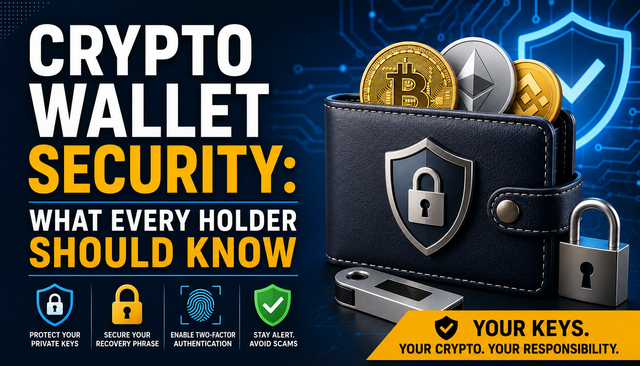
Owning cryptocurrency comes with a responsibility that differs from holding money in a bank account. Digital assets can be transferred quickly, stored independently, and accessed from anywhere, but these advantages also create security risks. A weak password, fake website, or misplaced recovery phrase can put funds in danger.
Crypto wallet security matters to anyone who holds Bitcoin, Ethereum, stablecoins, tokens, or other blockchain-based assets. Understanding how wallets work, what threats exist, and how to protect private access can reduce the risk of loss.
Understand What a Crypto Wallet Actually Stores
A common misunderstanding is that a crypto wallet physically stores coins like a traditional wallet stores cash. In reality, cryptocurrency remains recorded on a blockchain. The wallet stores or manages private keys that allow the holder to authorize transactions connected with a blockchain address.
Private key security determines who controls the assets. Anyone who obtains the private key or recovery phrase may be able to move the funds. In many cases, there is no central authority that can reverse an unauthorized transfer.
Learn the Difference Between Wallet Control Models
One of the first security decisions a crypto holder faces is choosing who controls the private keys. This is where the discussion around custodial vs non custodial wallets becomes important.
With a custodial wallet, a third-party platform generally controls the private keys for the user. This can make account access, recovery, and trading more convenient. However, the holder depends heavily on the security practices and continued operation of the service provider.
A non-custodial wallet gives the user direct control over private keys or a recovery phrase. This offers greater independence, but it also transfers responsibility for security and backup to the individual. If the recovery phrase is permanently lost, access may also be lost.
Neither approach removes risk completely. The better choice depends on how assets are used, the holder’s experience, and their ability to manage security.
Protect Your Recovery Phrase Like a Master Key
A wallet recovery phrase is one of the most sensitive pieces of information a crypto holder can possess. It is commonly used to restore access if a phone, computer, or hardware device is lost or damaged.
Because the phrase can restore control of the wallet, it should never be casually stored or shared. Scammers often create fake support conversations, websites, and forms designed to persuade users to reveal recovery phrases.
Basic precautions include:
- Never send a recovery phrase through email, social media, or messaging apps.
- Do not enter it into an unfamiliar website or form.
- Avoid keeping an unprotected screenshot in a phone gallery or cloud account.
- Store backups in a secure location protected from theft, fire, and accidental disposal.
- Never share the phrase with someone claiming to be customer support.
A legitimate wallet provider should not need a recovery phrase simply to answer a support question.
Use Strong and Separate Passwords
Passwords remain important for exchange accounts, wallet applications, email accounts, and related services.
Reusing one password across multiple websites creates unnecessary exposure. If one unrelated website suffers a breach, attackers may try the leaked credentials on crypto platforms. A unique password for every important account makes this attack less effective.
Strong passwords should be long, difficult to predict, and unrelated to obvious personal information. A reputable password manager can help users create and organize complex credentials.
Where available, additional verification should be enabled. Authentication apps or hardware security keys can provide stronger protection than relying only on a password. Users should also protect the email account linked to their crypto services because email access may be used in account recovery attempts.
Watch Carefully for Phishing Attacks
Phishing is a common way criminals try to steal wallet credentials. An attacker may imitate an exchange, wallet company, token project, or support team and direct the victim to a fake login page.
The page may look convincing, but its purpose is to capture passwords, private information, or wallet approvals. Some scams use urgent messages claiming an account is suspended, a wallet requires verification, or a reward must be claimed immediately.
Before entering credentials or connecting a wallet, check the website address carefully. Avoid unexpected links from direct messages, emails, advertisements, or social media posts. When possible, access important services through a saved bookmark or by typing the official address directly.
A message that creates panic or excitement should be treated cautiously until its source is independently verified.
Review Every Transaction Before Approving It
Crypto transactions can be difficult or impossible to reverse after confirmation, making careful review essential.
Before sending funds, compare the destination address, network, asset type, and amount. Even a small mistake can send assets to the wrong place. For larger transfers, some holders prefer sending a small test amount first.
Wallet users should also be cautious with smart contract interactions. Connecting a wallet to a decentralized application may request permissions that allow a contract to interact with specific tokens. Approving a request without understanding it can create unnecessary exposure.
Read wallet prompts instead of automatically clicking confirm. If a request seems unusual, stop and verify what the application is asking permission to do.
Keep Wallet Software and Devices Updated
Outdated software can contain known security weaknesses. Wallet applications, operating systems, browsers, extensions, and mobile devices should be kept updated through trusted sources.
Only download wallet software from official websites or verified application stores. Fake wallet apps and malicious browser extensions can imitate legitimate products while attempting to steal recovery phrases or transaction data.
Device security matters too. Use a screen lock, disk encryption where available, and reputable security protections. Avoid installing unnecessary software on a device that manages significant digital assets.
Keeping larger holdings on a dedicated device or hardware wallet can reduce exposure to malicious downloads and risky browsing.
Separate Daily Activity From Long-Term Storage
Not every crypto asset needs to be stored in the same wallet. Separating funds according to purpose can limit damage if one wallet becomes compromised.
A holder may keep a small amount in a wallet used for regular transactions while storing long-term holdings in another wallet with stronger security controls. A separate wallet can also be used for trying new decentralized applications or unfamiliar platforms.
This approach is similar to not carrying an entire savings balance in a physical wallet. Limiting the amount exposed to routine activity adds another layer of risk management.
Build Security Habits Before Problems Appear
Strong crypto security usually comes from consistent habits rather than one complicated tool. Holders should periodically review account settings, wallet backups, connected applications, device security, and storage arrangements.
Stay skeptical of unexpected offers. Free tokens, guaranteed returns, urgent support messages, and exclusive opportunities can all be used as bait. If an offer requires sensitive information or an unclear transaction signature, caution is justified.
Understanding custodial vs non custodial options, using secure backups, reviewing transactions, and protecting devices all contribute to a safer experience. The most effective security system is one the holder understands and follows consistently.
Make Security Part of Every Crypto Decision
Cryptocurrency gives users flexibility and control, but those benefits work best when security is treated as an everyday responsibility. A secure wallet setup should protect private access, reduce unnecessary exposure, and make recovery possible without placing sensitive information within easy reach of attackers.
No single wallet, device, or security feature can remove every threat. A better approach is to use several simple layers of protection and remain cautious whenever funds, passwords, recovery phrases, or transaction permissions are involved.
For every crypto holder, the goal is straightforward: understand who controls the keys, protect the information that provides access, verify actions before approving them, and keep security habits consistent as holdings and activity grow.
