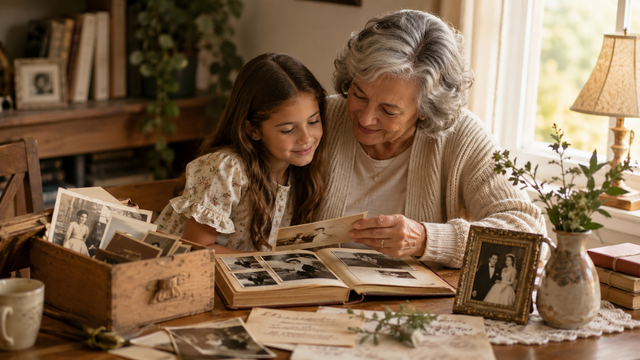
When someone you love passes away, the memories do not disappear. They stay in the stories, photos, habits, and traditions that continue inside the family. Adults may remember the person clearly. They may remember their voice, their laugh, their advice, their favorite meals, and the small things that made them special. But younger children may not have the same memories. Some may have been too young when the loss happened. Others may be born years later.
This is why keeping memories alive for the next generation is so important. It helps children understand their family history. It also allows the love of someone who has passed to remain part of the family’s life. A person may be gone physically, but their story can still be shared, remembered, and carried forward.
Share Simple Stories Often
Children connect with stories in a natural way. They may not understand long explanations about grief, but they can understand small memories. Tell them about the person’s favorite food, favorite song, funny habits, kind gestures, or special sayings.
The stories do not need to be dramatic. In fact, ordinary stories often feel the most real. You might say, “Your grandfather always made tea in the evening,” or “Your aunt loved this song,” or “Your grandmother used to bake this cake for everyone.”
These small details help children feel connected to someone they may not remember clearly. Over time, the stories become part of family identity.
Keep Photos Where Children Can See Them
Photos help make memories feel real. A child may hear stories about a loved one, but seeing a picture gives the story a face. It helps them understand that this person was real, loved, and important.
Families can keep photos in albums, frames, memory boxes, or on the refrigerator. Some families use memorial photo magnets in shared spaces so children see the loved one’s face during everyday routines. A simple photo on the fridge can lead to questions, stories, and meaningful conversations.
When children ask about the person in the picture, it becomes a gentle chance to share love and family history.
Continue Family Traditions
Traditions are one of the strongest ways to pass memory from one generation to another. If your loved one had a special recipe, holiday routine, prayer, song, or family habit, continuing it can keep their presence alive.
For example, you may cook a dish they loved on holidays. You may play their favorite music during family gatherings. You may visit a place they enjoyed or repeat a saying they often used.
The important part is explaining the meaning behind the tradition. Tell children why the recipe matters or why the family visits a certain place. This helps them understand that remembrance is not only about sadness. It is also about love, gratitude, and connection.
Create a Memory Box Together
A memory box can be a beautiful way to preserve small pieces of a loved one’s life. It may include photos, letters, cards, jewelry, recipe notes, small keepsakes, or anything that carries emotional meaning.
Children can look through the memory box with an adult. They can ask questions and hear stories connected to each item. This makes remembrance feel personal and interactive.
A memory box should not feel like something hidden away forever. It can be opened on special days, during family gatherings, or whenever someone wants to remember. Over time, it can become a family treasure.
Let Children Express Their Feelings
Children may respond to loss in different ways. Some ask many questions. Some become quiet. Some draw pictures, write notes, or want to look at photos again and again. Others may seem unaffected at first and ask questions months later.
All of these responses can be normal. It is important to give children space to express their feelings in their own way. They may not always have the words to explain grief, but they can still feel absence and curiosity.
Encourage them to draw a picture, write a small message, share what they know, or talk about what they feel. If they did not know the loved one personally, they can still connect through family stories and keepsakes.
Speak About Love, Not Only Loss
When passing memories to the next generation, try to talk about the person’s life, not only their passing. Share what they loved, what they enjoyed, how they helped others, and what made them unique.
Children should understand that the person was more than the sadness surrounding their death. They were someone who laughed, worked, cared, celebrated, made mistakes, gave love, and shaped the family in meaningful ways.
This helps children receive the memory with warmth instead of fear. It teaches them that remembering someone can be comforting, not only painful.
Let Their Story Continue
A family’s history is carried through the stories people choose to keep telling. When memories are shared with children and grandchildren, a loved one’s influence continues. Their values, kindness, humor, lessons, and traditions can live on through the next generation.
Keeping memories alive does not mean holding children in grief. It means giving them roots. It helps them know where they come from and who helped shape the family before them.
A photo, a story, a recipe, a keepsake, or a small tradition can carry love forward. These simple acts remind families that even after loss, connection can remain. The people we love continue to live in the memories we protect, the stories we share, and the love we pass on.
