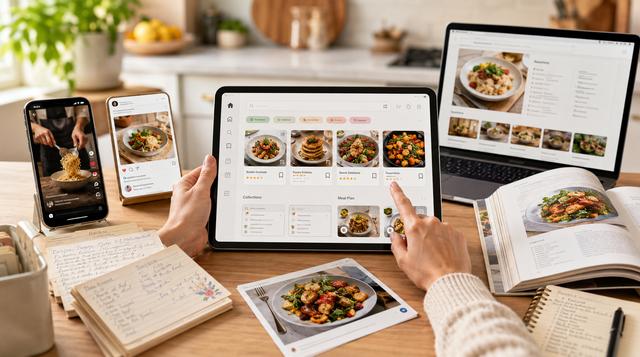
Every home cook has recipes saved in different places. Some are saved from TikTok, some are found on Instagram, some are bookmarked from websites, and some are written on old family cards. A few may be stored as screenshots, while others may still be sitting inside cookbooks, notebooks, or kitchen drawers. The recipes are there, but they are not always easy to find when it is time to cook.
This is one of the biggest problems with modern recipe collecting. People are discovering more recipes than ever before, but those recipes are spread across too many apps, platforms, folders, and paper sources. When a recipe collection becomes scattered, it becomes harder to use. A good recipe should not disappear just because it came from a social media post, a website, or a handwritten note.
A private recipe collection app like CookBook helps home cooks bring all those recipes into one organised place. Instead of relying on social media saves, browser bookmarks, screenshots, and loose paper cards, users can create a searchable digital cookbook that is easier to manage, edit, plan from, and cook with.
Why Recipe Collecting Has Changed
In the past, most home cooks kept recipes in printed cookbooks, handwritten notebooks, magazine clippings, or family recipe boxes. These sources were limited, but they were also easier to understand. If someone wanted a recipe, they usually knew which book, card, or folder to check.
Today, recipe inspiration comes from everywhere. A cook may find a pasta idea on TikTok in the morning, save a salad reel from Instagram in the afternoon, and bookmark a dessert recipe from a website at night. The next week, they may take a photo of a family recipe card or scan a page from an old cookbook.
This variety is useful, but it creates a new kind of clutter. Recipes are no longer stored in one place. They are spread across different platforms that were not designed to work together as a proper recipe library.
The Problem with Scattered Recipes
Scattered recipes create frustration in the kitchen. You may remember saving a recipe, but not where it was saved. You may know that the recipe used chicken and rice, but not whether it came from Instagram, TikTok, a website, or a screenshot.
This wastes time. Instead of cooking, you start searching. You open social media apps, scroll through saved posts, check browser bookmarks, search your camera roll, and look through old notes. Sometimes you find the recipe quickly. Other times, you give up and search for a new one.
The bigger your recipe collection becomes, the more important organisation becomes. Without a proper system, saved recipes can become just as hard to use as recipes that were never saved at all.
Why a Private Recipe Collection Matters
A personal recipe library should reflect the way you actually cook. It should include the recipes you want to try, the meals your family enjoys, the old recipes you want to preserve, and the dishes you return to again and again.
A private recipe collection is different from a public social media save folder. It is built for your kitchen, your taste, and your routine. You can edit recipes, add notes, organise categories, mark favourites, adjust serving sizes, and keep everything searchable.
This gives home cooks more control. Instead of depending on outside platforms to store important recipes, they can build their own reliable cooking library.
Saving Recipes from TikTok
TikTok is one of the most popular places to discover new food ideas. Short videos make recipes look simple and exciting. A quick dinner, viral snack, easy dessert, or meal prep idea can catch your attention in seconds.
But TikTok is not built to work as a long-term recipe manager. A video may move too quickly. Ingredients may be shown briefly or placed in the caption. Measurements may be unclear. Important tips may appear in the comments. Even if you save the video, finding it later can be difficult.
Moving TikTok recipes into a digital cookbook makes them easier to use. The recipe can be saved with a clear title, ingredients, method, notes, and tags. Instead of staying as a video you once liked, it becomes part of your actual cooking collection.
Saving Recipes from Instagram
Instagram is another major source of recipe inspiration. Food creators share recipes through Reels, captions, carousel posts, and stories. These recipes are easy to save, but not always easy to manage later.
Saved Instagram posts often sit beside travel ideas, fashion posts, fitness tips, and other content. Even if you create collections, searching by ingredient, meal type, or cooking need can still be difficult.
A recipe collection app helps move Instagram recipes into a cleaner system. A dessert reel can become a proper recipe card. A dinner post can be saved with ingredients and steps. A sauce recipe can be tagged under quick meals, pasta, or family favourites.
This makes Instagram recipes easier to find and cook from when you actually need them.
Importing Recipes from Websites
Recipe websites and food blogs are still valuable, especially when they include detailed instructions, photos, and cooking tips. But saving website recipes as bookmarks can become messy over time.
A browser bookmark does not always give you a clean cooking experience. The page may include ads, pop-ups, long introductions, or extra sections around the actual recipe. If you have hundreds of bookmarks, finding one recipe can become difficult.
Importing recipes from websites into a digital cookbook helps keep the useful parts organised. The recipe can be stored in a cleaner format, edited if needed, and placed into the right category. This makes website recipes easier to use alongside recipes from social media, photos, and family cards.
Scanning Handwritten and Printed Recipes
Some of the most meaningful recipes are not online at all. They may be written on old family cards, printed in cookbooks, saved from magazines, or stored as paper clippings. These recipes often carry personal value, but they can be easy to lose or damage.
A private digital cookbook helps preserve these recipes while making them easier to use. A handwritten card can be scanned, reviewed, edited, and saved as part of the same collection as modern recipes. A printed cookbook page can be digitised and organised with tags and notes.
This is especially useful for family recipes. Instead of leaving them in a drawer where they may be forgotten, home cooks can bring them into a searchable recipe library and keep them available for future cooking.
Organising Recipes by Real Cooking Needs
A recipe collection should be organised around how people actually cook. Most home cooks do not think only by source. They think by need. They want dinner ideas, quick lunches, desserts, meal prep meals, family favourites, or recipes using ingredients they already have.
This is why categories and tags are important. Recipes can be organised by breakfast, lunch, dinner, snacks, desserts, drinks, holidays, special occasions, or meal prep. Tags can add even more detail, such as chicken, pasta, quick meals, vegetarian, freezer meals, or party food.
A single recipe can fit several situations. A chicken pasta recipe may be dinner, pasta, chicken, quick meals, and family favourite at the same time. Good organisation makes it easier to find recipes from different angles.
Searching Recipes Faster
Search is one of the most valuable parts of a digital recipe collection. When recipes are saved across different apps, search becomes difficult. When they are saved in one system, search becomes practical.
You can search by title, ingredient, category, tag, or note. If you have potatoes at home, you can search for potato recipes. If you need a fast meal, you can search quick dinners. If you want a recipe you saved from social media, you can search by its tag or name.
This saves time and reduces frustration. Instead of scrolling through old posts and screenshots, you can quickly find recipes that match what you want to cook.
Editing Recipes to Fit Your Kitchen
Recipes are rarely perfect for every household. One cook may want less spice. Another may need more servings. Someone else may want to replace an ingredient or add extra vegetables. A recipe becomes more useful when it can be edited.
A digital cookbook allows home cooks to adjust recipes after saving them. They can add missing measurements, rewrite unclear steps, change servings, add notes, and record what worked best.
This is especially helpful for recipes from social media, where details may be incomplete. It is also useful for family recipes that may use old measurements or informal instructions. Editing helps make every recipe clearer and easier to repeat.
Using Saved Recipes for Meal Planning
A recipe collection becomes even more useful when it connects to meal planning. Many people save recipes because they want to cook them later, but without a plan, those recipes often stay forgotten.
Meal planning helps turn saved recipes into actual meals. A home cook can choose recipes from their collection and plan them for the week. A TikTok dinner can be added to Monday. A family recipe can be planned for Sunday. An Instagram dessert can be saved for the weekend.
This makes recipe saving more practical. Recipes are not just collected. They become part of daily cooking.
Making Grocery Shopping Easier
When recipes and meal planning are organised, grocery shopping becomes easier too. Instead of guessing what to buy, home cooks can shop based on the recipes they actually plan to make.
This helps reduce forgotten ingredients and random purchases. It also makes it easier to use what is already at home. If a recipe collection can be searched by ingredient, users can plan meals around items that need to be used before they go bad.
A better recipe system can help save time, reduce waste, and make the weekly cooking routine feel more manageable.
Keeping Recipes Safe for the Future
Recipes are personal. They represent family habits, favourite meals, cultural traditions, experiments, and everyday routines. Losing a recipe can feel frustrating, especially when it is one you loved or one that came from someone important.
A private digital cookbook gives recipes a safer home. Social media posts may be deleted. Website links may change. Screenshots may get buried. Paper cards may fade or get misplaced. But a well-organised recipe collection keeps everything easier to access and protect.
This matters not only for today’s cooking, but also for the future. A strong recipe library can grow over time and become more valuable with every recipe added.
A Smarter Way to Manage Every Recipe You Save
Modern home cooks do not need more scattered saves. They need one reliable place for all the recipes they want to keep. Recipes from TikTok, Instagram, websites, cookbooks, handwritten cards, and photos should not stay separated across different platforms.
A private recipe collection app helps bring everything together. It makes recipes easier to save, organise, search, edit, plan from, and cook again. Instead of losing good ideas in social feeds, screenshots, bookmarks, and drawers, home cooks can build a digital cookbook that works for real life.
For anyone who collects recipes from everywhere, creating one organised recipe library is the best way to make those recipes easier to use, easier to protect, and easier to enjoy in everyday cooking.
